Research Infrastructure
Excellent hardware and software is the base for leading-edge research, service and lecturing
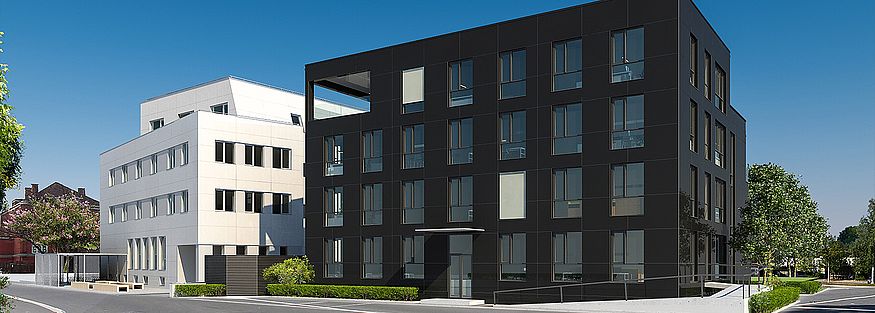
Montanuniversität’s ongoing investments in new infrastructure are the result of a long history of outstanding achievements. The DGE building inaugurated in July 2016 and the DGE laboratory building next to it, are the most recent proof of the importance of DGE.
DGE Building

Three chairs, one department, one building: Drilling, Production and Reservoir Engineering
High-tech, multimedia-equipped lecture and seminar rooms
Meeting areas for agile and open project discussions
DGE Laboratory Building
Leading-edge laboratory equipment and software for research, training and lecturing
Highest HSE standards of laboratory facilities, procedures and processes
The research facilities of the three chairs concentrated in one building
Flooding & Imaging Laboratory

Imaging of fluid flow in porous media for investigating fluid displacement mechanisms
Leading-edge experimental capability: microfluidics, medical computed tomography CT (medical computed tomography) based long-core flooding unit, micro-CT-based core flooding unit, interfacial properties by pendant and spinning drop, image processing and analysis (digital rock physics)
Currently applied to Enhanced Oil Recovery, geological hydrogen storage and carbon sequestration
Reservoir Simulation Laboratory
Pore-scale flow modeling (GeoDict, digital rock physics)
Continuum-scale modeling in DuMuX in collaboration with University of Stuttgart, Enhanced Oil Recovery
Tough2 and ToughReact modeling for geothermal engineering and CO2 sequestration
CDC Drilling Digitalization Laboratory
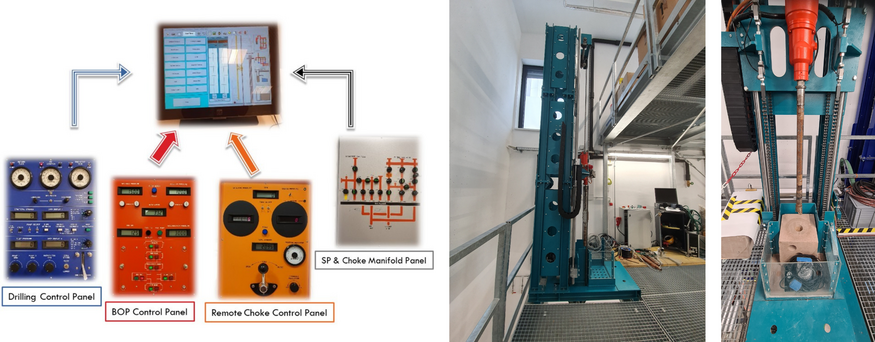
CDC Mini-Rig for experimental, hands-on, research-based learning
High end, mobile well control simulator for teaching and training
Real-Time Operating Center (RTOC) replicates industry conditions for monitoring well performance, and analysis
CDC Digital Flow Laboratory (DFL)
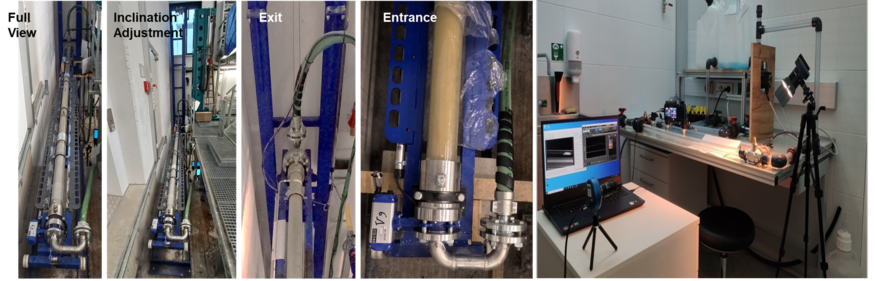
Innovative non-invasive and invasive sensors development and testing for improved measurement accuracy and safety in operations
AI-driven automation models to enhance decision-making and increase operational efficiency
Development of physics informed models (PIMs) for accurate simulations and in-line analysis for various application
CDC Energy Storage and CCS Laboratory
Using high-end technologies to reduce uncertainty in H2, CH4 and CO2 Storage
Using digital solutions to improving the chance of success for CCS, Geothermal Exploration and making faster decisions
Analyzing the near-wellbore zone as a whole rather than separate components
CDC Well Integrity and Cementing Laboratory
Evaluates wellbore material performance throughout the well's life cycle
Assess cement aging and bonding under varying operational conditions
Performing required API tests for subsurface well cementing operations
Pump Testing Facility
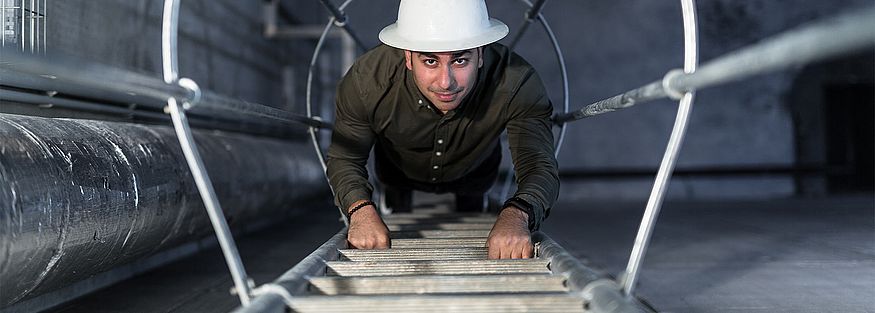
Sucker rod pump including the anti-buckling system
Artificial lift systems such as electrical submersible, progressive cavity and hydraulic pump
Leading edge control unit for various performance test scenarios
Simulation Laboratory
Oil & Gas Production Optimization
Optimization of Geothermal Energy Recovery
Sustainable Remodeling of Uneconomic Wells